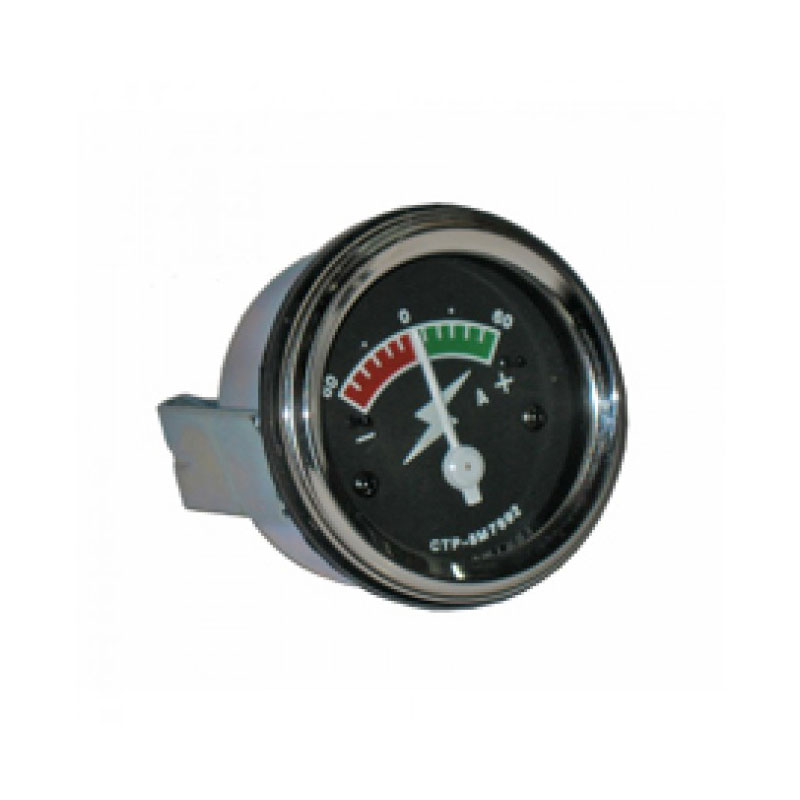
This is an ammeter gauge, which measures and displays the electrical current flowing into and out of the battery system. It is manufactured to meet rigorous OEM standards for accuracy and durability, providing reliable readings unlike a worn or faulty gauge that may show incorrect values. Operators might observe erratic needle movement, a stuck needle, or no reading at all if this ammeter gauge fails.
Always verify with serial number before ordering.
Parts Trading Company · Mumbai, Est. 1956 · Same-day dispatch · Ships worldwide · GST invoice included
From the same category — may also be needed
Full shipping information on regional pages · Air freight 2–12 days · GST invoice for India
Disconnect main battery before working on electrical components. Use dielectric grease on all connector pins. Check ground connections — most electrical faults trace to poor grounds. Test with multimeter before installing new parts.
Always consult the OEM service manual for model-specific torque values and procedures. WhatsApp our technical team if you need fitment guidance.
The first sign of a faulty ammeter gauge is often an inaccurate or erratic display of electrical current. If ignored, operators may not be alerted to critical charging system issues, potentially leading to a dead battery. The worst consequence is the inability to monitor the electrical system's health, risking damage to sensitive electronics or unexpected equipment shutdown.
Ensure the battery is disconnected before removing the old gauge to prevent electrical shorts. When connecting the new gauge, ensure the terminals are clean and the wires are securely attached to the correct posts.
Inspect the alternator or generator output, battery voltage, and all wiring connections to the ammeter and related components.