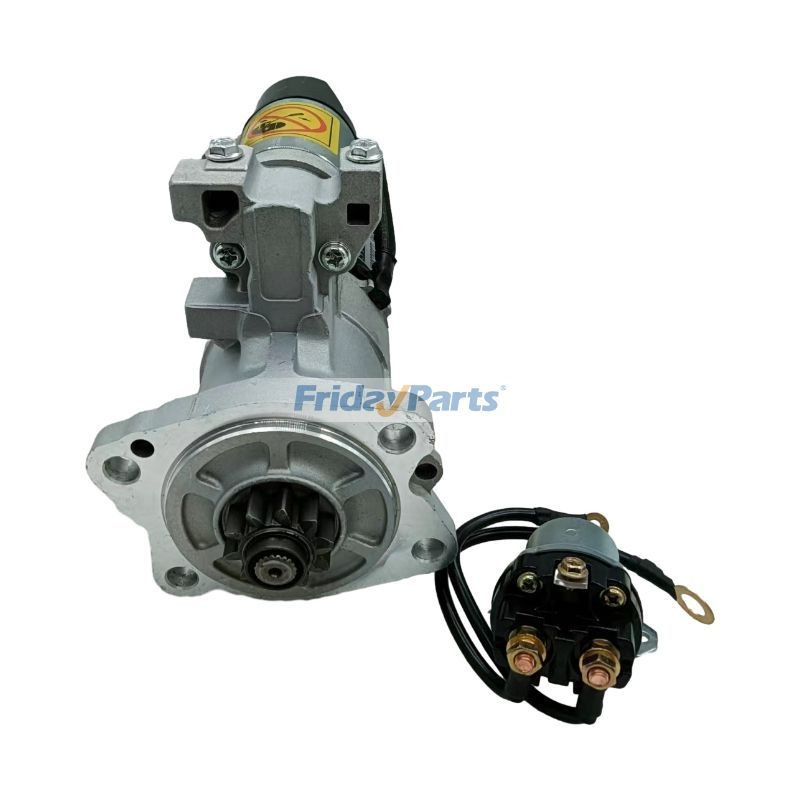
This starter motor is the primary electrical component responsible for initiating the engine's combustion cycle by engaging the flywheel. It is manufactured to meet stringent OEM quality standards, ensuring reliable cranking power and durability compared to a worn unit exhibiting slow or no engagement. Operators may notice a clicking sound without engine turnover, or a complete lack of response when attempting to start the equipment.
Always verify with serial number before ordering.
Parts Trading Company · Mumbai, Est. 1956 · Same-day dispatch · Ships worldwide · GST invoice included
From the same category — may also be needed
Full shipping information on regional pages · Air freight 2–12 days · GST invoice for India
Disconnect main battery before working on electrical components. Use dielectric grease on all connector pins. Check ground connections — most electrical faults trace to poor grounds. Test with multimeter before installing new parts.
Always consult the OEM service manual for model-specific torque values and procedures. WhatsApp our technical team if you need fitment guidance.
The first sign of a failing starter motor is often a slow or hesitant engine crank. If ignored, the starter may eventually fail to engage the flywheel at all, leaving the equipment inoperable. Continued attempts to start with a failing starter can also lead to damage to the flywheel ring gear.
Ensure the battery is disconnected before removing the old starter to prevent accidental engagement or electrical shorts. Do not overtighten mounting bolts, as this can strip threads or warp the starter housing.
Inspect the flywheel ring gear for any chipped or broken teeth, and check the condition of the battery and its cables.